 Innovative Solutions. Proven Expertise.
REAL ESTATE MERCHANT BANKING
Innovative Solutions. Proven Expertise.
REAL ESTATE MERCHANT BANKING

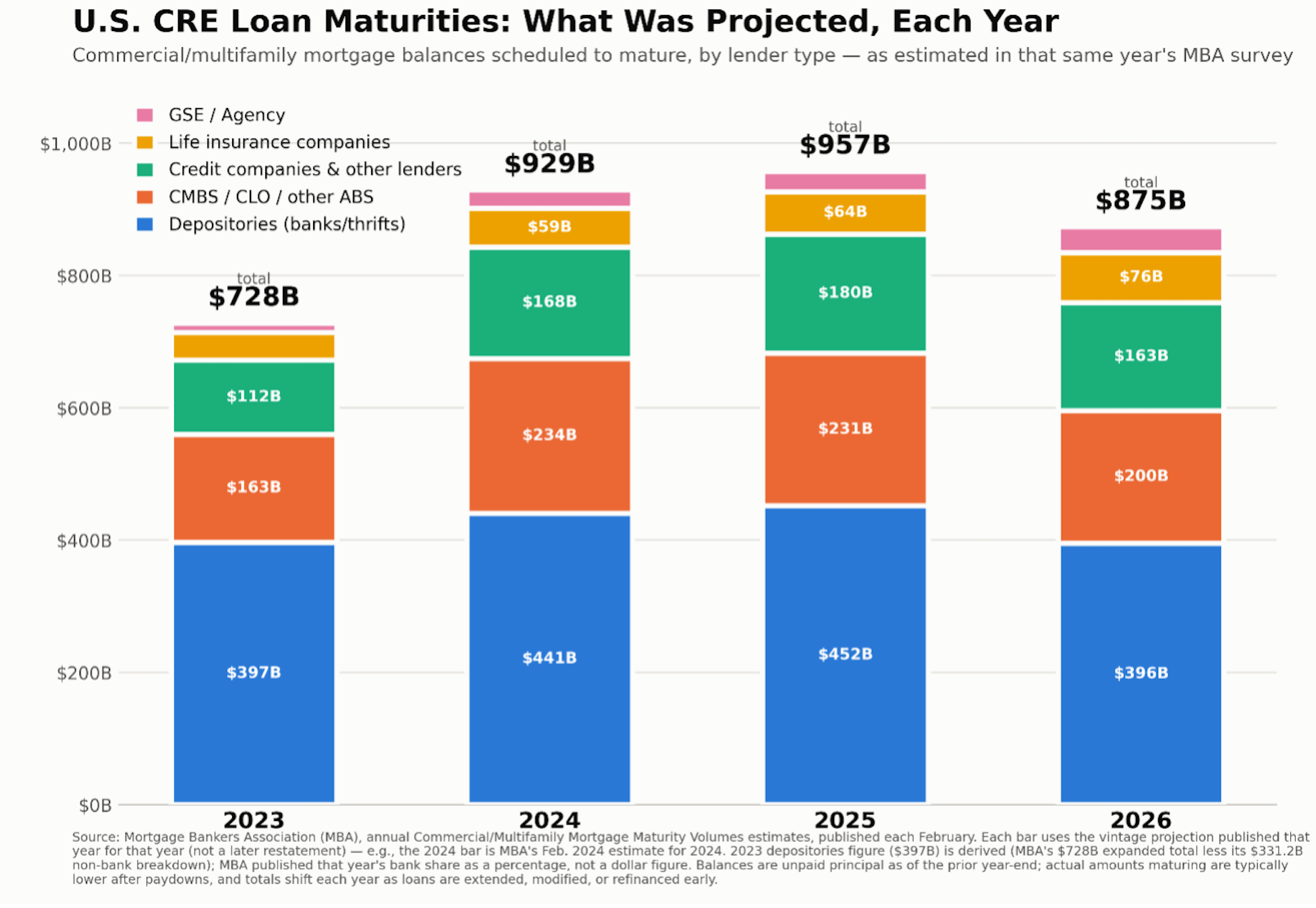
The commercial real estate industry is now going into the third consecutive year of a looming wall of maturities. We first anticipated a that wall to hit in 2024, driven by a combination of 10-year, fixed-rate loans that were originated in 2014;, the first significant year of loan originations post GFC; , and two- and three-year bridge loans that were originated in 2021 and 2022 to finance value-add investments, primarily in multifamily.
In each of the last two years we saw the same pattern: sponsors/borrowers testing the market for both a sale and refinance,before ultimately and then returning to their current lender and receiving an extension and loan modification. In the past 12 monthsThis past year lenders have been less lenient with their borrowers resulting in and we are seeing an increase in activity in cash-in refinances. The combination of flat or negative rent growth in certain markets and product types, combined with rising treasury yields and rising cap rates, is leading sponsors to ‘hope for the best’ and take a shorter-term loan in anticipation of improved fundamentals and valuations in the next three to five years.
Rate Buydowns
With rates on five-year, maximum-leverage loans ranging from 6-7%, loan proceeds are typically DSCR- constrained and therefore borrowers and lenders are forced to make concessions to get to near-cash neutral refinances. One such creative solution has come in the form of rate buydowns. Essentially CMBS and Agency (max 2%) lenders will allow borrowers to reduce their spread by increasing their lender fee. The rule of thumb is that on a five-year loan 1% of upfront loan fee is worth about 23 to 25 basis points of spread reduction. Some borrowers are paying up to 3-4% up front in order to push loan proceeds on CMBS loans that are underwriting to as low as a 1.15x DSCR on an Interest Only (IO) basis.
Bridge-to-Bridge Loans
Another solution has been a bridge-to-bridge loan with higher-priced, 8% (SOFR + 4.25%) loans sizing their proceeds to 1.0x DSCR on an IO basis. These loans are typically are flexible on prepayment and are have been favored amongst borrowers that anticipate an exit within the next 12 months.
Preferred Equity and Mezzanine
Lastly, preferred equity and mezzanine loans have provided borrowers with additional leverage when rate buydowns and bridge-to-bridge refinances don’t provide the necessary leverage and the borrower is unable to fund additional capital. As yYields on preferred equity have compressed in recent years, mwith many providers are targeting 10-12% annual yields on their capital. with theThis provides the ability to bifurcate that return into a current pay and an accrual in order to be able to pay a current yield on this capital.
In all, we have a very liquid debt market. Wand while borrowers don’t like the cost of the debt today, most don’t have a choice and are benefiting from creative options along with aggressive underwriting. These alternatives help in order to achieve loan amounts that either fully refinance or come close to refinancing their existing debt.